


More Than Waves: The Story of the Durag
When most people hear the word durag, they probably think of waves. But that's only part of the story. They're also worn to help keep braids, twists, locs, and other hairstyles neat and protected.
And there's more to the durag than what it does for your hair.
Over the years, it's been a practical hair-care tool, a symbol of Black identity, a fashion statement, and even something that's been banned. Its story is tied to the way Black culture has been expressed, celebrated, and sometimes misunderstood.
And as a parent, I think that's part of what makes the durag so meaningful. It's something we can use to care for our children's hair while also sharing a little more about the culture and history behind it.
It started with a need to protect the hair
The story of the durag goes back further than the name we use today.
In an article for i-D, writer Antwaun Sargent explores the durag's connections to African headwear and the head coverings worn by enslaved people in America. Head coverings have served many purposes throughout history, from protecting the hair during physical labor to maintaining hairstyles and expressing cultural identity.
That hasn't changed much. To this day, the durag serves a practical role that's familiar to generations of Black families.
From the bedroom to the streets
For a long time, the durag was something people mainly wore at home, especially at night.
There's an interesting piece of history preserved at the Smithsonian's National Museum of African American History and Culture: Do-Rag Brother, a 1968 painting by Vincent DaCosta Smith.
The painting depicts a Black man wearing a do-rag against a wall marked with phrases like "Black Power" and "Soul Brother."
It serves as a reminder that even when the durag was being worn for everyday hair care, it existed within a much larger cultural conversation about Black identity, pride, and representation.
By the 1990s and early 2000s, the durag had become much more visible in mainstream culture. Hip-hop artists like Nelly and 50 Cent wore them, and basketball player Allen Iverson helped make the look recognizable well beyond the world of sports.
But that visibility came with criticism, too.
Many Black parents worried about how their children would be perceived wearing durags in public. Those concerns weren't happening in isolation. The NBA and NFL introduced dress codes that restricted certain types of headwear, including durags, during the early 2000s.
What message did that send? Something many Black people wore to care for their hair had become associated with negative stereotypes about the people wearing it.
The durag itself hadn't changed. The way people looked at it had.
Reclaiming the durag
Over time, Black artists, designers, and cultural figures continued to challenge those perceptions, bringing the durag into spaces where it hadn't always been welcomed.
One example is Rihanna, who incorporated durags into her Fenty Puma runway collection and later wore one on the cover of British Vogue.
Moments like these helped bring new attention to an accessory that had long been part of Black life, showing that it could be practical, expressive, and fashion-forward all at once.
And I think that's an important part of the story to share with our kids.
The durag doesn't have to mean just one thing. It can be part of a hair-care routine, an expression of personal style, or a way to connect with a culture that has always found creative ways to express itself.
Understanding the history behind something changes the way you see it.
What does a durag actually do for your child's hair?
There's a practical reason durags have remained part of so many hair-care routines.
Much like a bonnet, a durag can help protect your child's hair from friction and keep certain hairstyles in place.
Here's how it can help:
- Helps maintain hairstyles. A durag can help keep waves laid and reduce disruption to braids, twists, and other styles while your child sleeps.
- Reduces friction. A smooth satin or silk surface can reduce rubbing between the hair and a cotton pillowcase, which may help limit tangling and breakage.
- Helps hair retain moisture. Satin and silk are generally less absorbent than cotton, so they can help reduce moisture transfer from the hair to the fabric.
- Provides a protective layer. A durag can help keep hair in place beneath certain hats or other headwear, depending on the fit and activity.
The fabric makes a difference, too. Silk is a natural fiber, while satin describes a type of weave that can be made from different fibers, including polyester. Both can provide a smooth surface for the hair.
For everyday use, a satin durag can be a practical, affordable option. Just make sure it fits comfortably and isn't tied so tightly that it pulls on your child's hairline.
Why I wanted a durag my son would actually wear
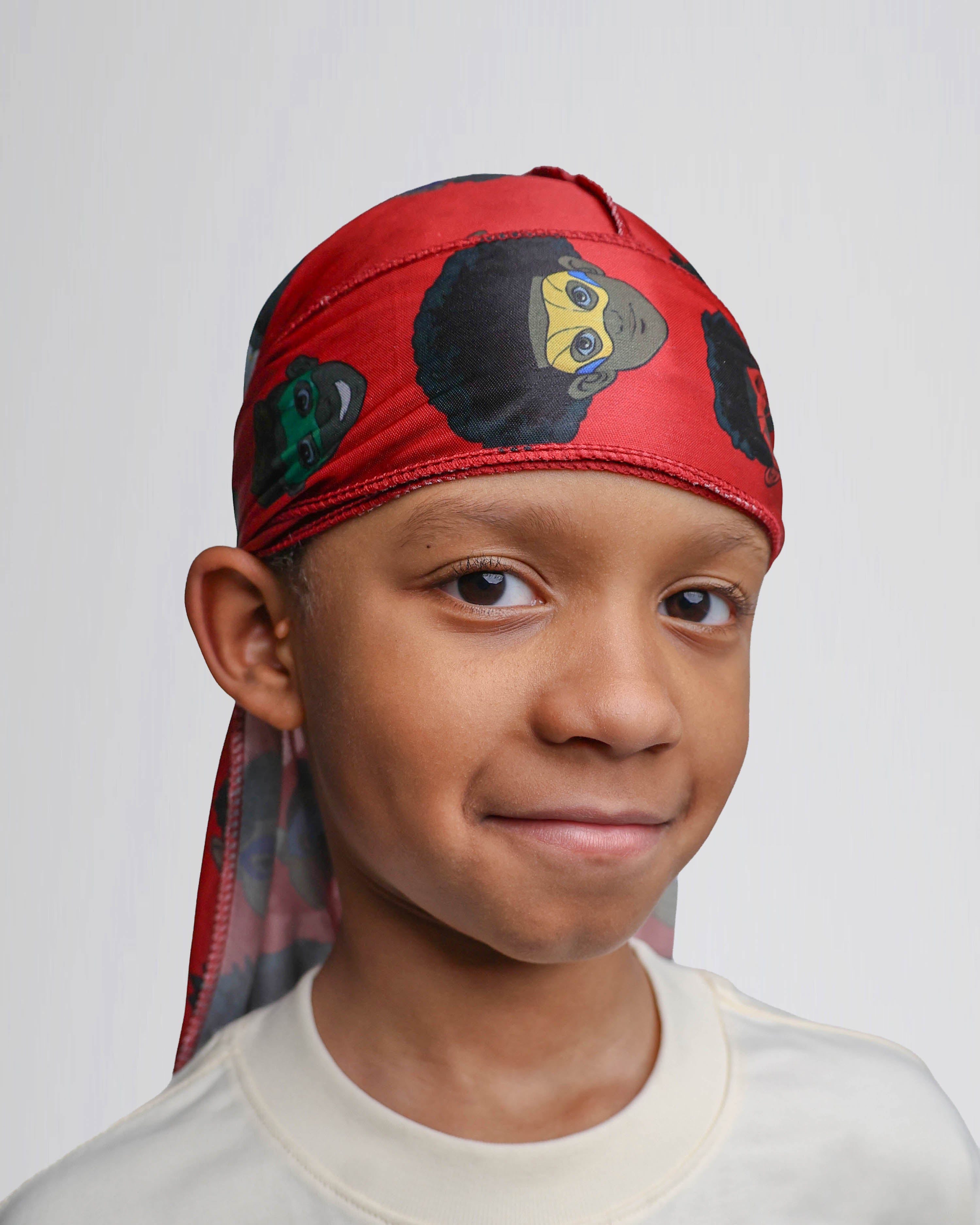
When I started designing our My Hero durags, I kept coming back to three things.
First, I wanted something that would help preserve the moisture in Jet's sandy colored hair without making the routine more complicated or expensive than it needed to be.
Second, I wanted a fit that worked for children. At the time, it was hard to find kids' durags sized for a toddler.
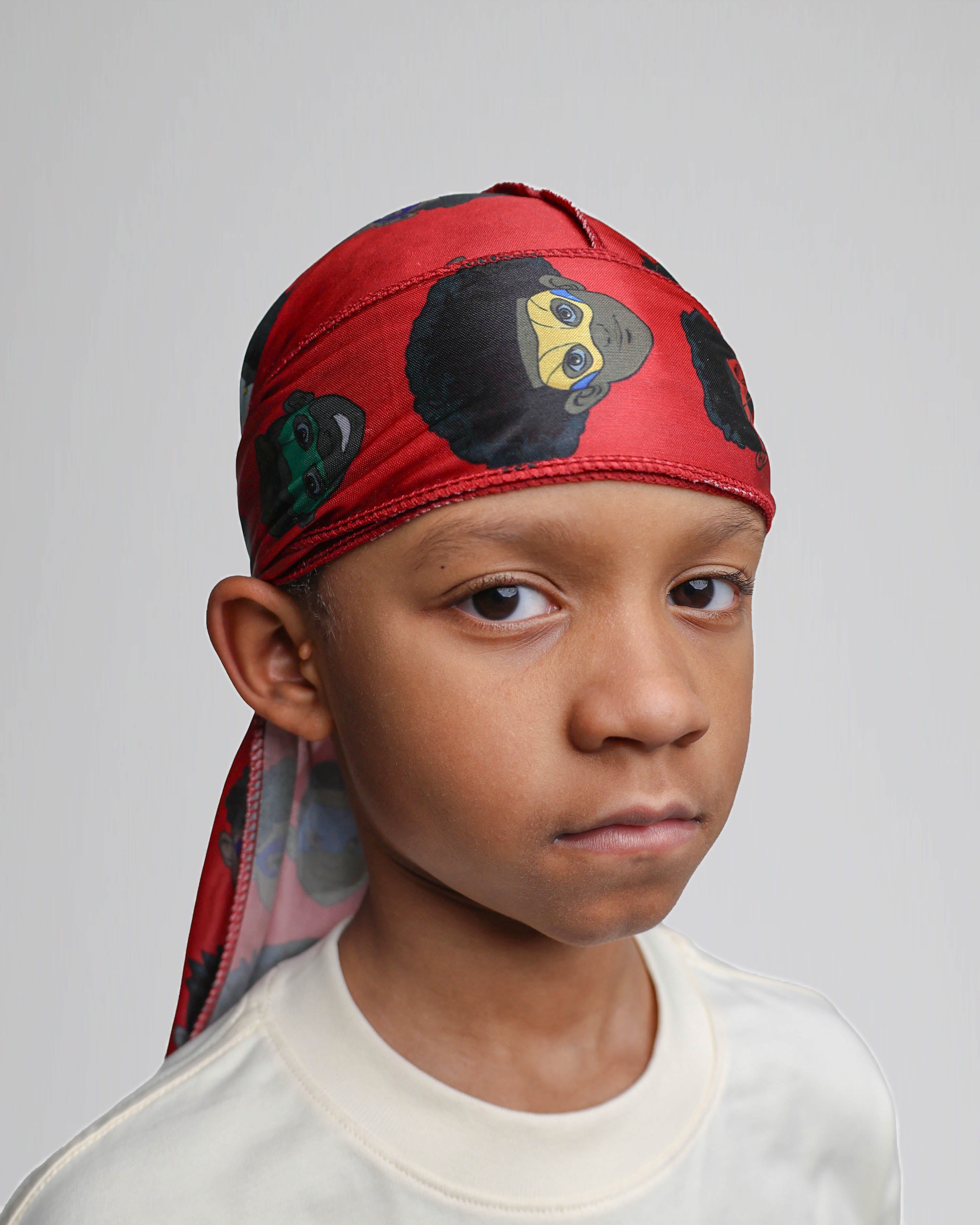
And third, I wanted a design he'd actually be excited to wear, one that represented our values and culture.
I wanted to create something that felt natural for him to wear, something that made the routine a little more fun, not something that required a lot of convincing.
That thinking became part of My Hero. The designs bring together hair care, creativity, and representation, giving me a chance to talk with Jet about the people and culture reflected in the prints.
For me, it was never just about making another durag. It was about creating something useful that could also become part of a bigger conversation with my son.
Self-care is for boys, too
Something else I've thought about through this process is how we teach children to take care of themselves.
Girls are often introduced to beauty routines at an early age. Boys, on the other hand, can sometimes be given the impression that caring about their appearance should come naturally, or that spending time on it is unnecessary.
Small habits can help them become more independent and comfortable taking care of their own needs as they get older. And a durag can be one small part of that process.
It's an opportunity to teach your child how to care for their hair, understand why the routine matters, and take pride in the things that make them who they are.
I want Jet to know that self-care isn't something extra. It's simply part of looking after himself.
The takeaway
If you're introducing a durag into your child's routine, make it easy.
Let them choose a color or print they like. Show them how to put it on comfortably, and make it part of the bedtime routine rather than a separate task.
And if the moment feels right, talk about the history behind it, too.
Because the durag is more than a way to maintain a hairstyle. It's a piece of a much bigger story, one that connects hair care, creativity, culture, and identity.
And those are stories worth passing down.
Further reading: How the Du-Rag Is Being Reclaimed by Black Artists and Designers (i-D) · Do-Rag Brother (Smithsonian National Museum of African American History and Culture) · What Your Child's Bonnet Is Really Doing


Be the first to comment.