


What Your Child's Bonnet Is Really Doing
If you grew up wearing a bonnet or a night scarf, it's one of those things you don't think twice about. You finish your nighttime routine, put your bonnet on, and head to bed. It was simply part of how we were taught to take care of our hair.
But have you ever stopped to think about what your bonnet is actually doing? Or wondered whether that bonnet labeled "silk" is really made of silk? Is silk really necessary?
A bonnet won't magically make your child's hair healthier. It's meant to help protect the hair you've already spent time caring for. Think of it as a way to help your wash day last a little longer.
A bonnet protects your routine, not replaces it
One thing to understand is that a bonnet works best when it's part of a consistent hair-care routine.
If your child's hair is already dry before bed, putting on a bonnet won't add moisture back into it. But if you've washed their hair, moisturized it, and sealed in that moisture as part of your routine, a bonnet can help reduce friction and moisture loss while they sleep.
That's why we always come back to the importance of a good hair-care regimen. The bonnet is the final piece, not the entire routine.
What happens to your child's hair while they sleep?
Cotton pillowcases can contribute to two things that matter when caring for textured hair: friction and moisture absorption.
First, there's friction. As your child moves around in their sleep, their hair rubs against the pillowcase. That repeated rubbing can contribute to tangles, frizz, and breakage, especially when the hair is already prone to dryness or damage.
Then there's moisture. Cotton absorbs water, which means some of the moisture on your child's hair can transfer to the fabric as they sleep. Textured hair is prone to dryness, so holding on to moisture is an important part of keeping it manageable.
As dermatologist Dr. Janiene Luke explained to Consumer Reports, less moisture is absorbed with silk than with typical cotton, which matters most for curly and textured hair.
It's worth noting that independent research specifically comparing bonnets and their effects on children's hair is limited. Still, reducing friction and helping hair retain moisture are sensible reasons to consider a protective nighttime routine.
Silk, satin, and sateen: what's the difference?
If you've ever shopped for a bonnet, you've probably seen these terms used interchangeably. They sound similar, but they don't mean the same thing.
Silk is a fiber.
Silk is a natural fiber produced by silkworms. It's known for its smooth feel, strength, and luxurious finish. It's also generally more expensive than many alternatives.
Satin is a weave.
Satin describes how a fabric is woven to create a smooth, glossy surface. While traditional satin was often made from silk, modern satin can be made from polyester and other fibers, too.
Sateen is usually made from cotton.
Sateen uses a weave that gives cotton a smoother, slightly lustrous finish. But because it's still cotton, it can absorb moisture in ways that silk and many synthetic satin fabrics do not.
So, when you're shopping for a bonnet, don't rely on the word "silk" or "satin" alone. Check the fabric composition to see what you're actually buying.
Which one makes the most sense for your child?
Both silk and satin can provide a smooth surface for your child's hair, but there are a few practical differences to consider.
Silk is a great option if you're looking for a natural fiber with a smooth feel, but it typically comes at a higher price. Polyester satin is generally more affordable, making it a practical choice for everyday use.
And when you're shopping for kids, practicality matters.
Between bedtime routines, restless sleepers, laundry days, and the occasional missing bonnet, you want something that works for your family without making hair care more complicated than it needs to be.
That's why we use satin for our children's bonnets and durags. We want protective hair accessories to be an easy, everyday part of your child's routine.
The best bonnet is the one they'll actually wear
Let's be honest: the fanciest bonnet in the world won't do much good if your child takes it off five minutes after getting into bed.
When choosing a bonnet, there are a few things I'd pay attention to:
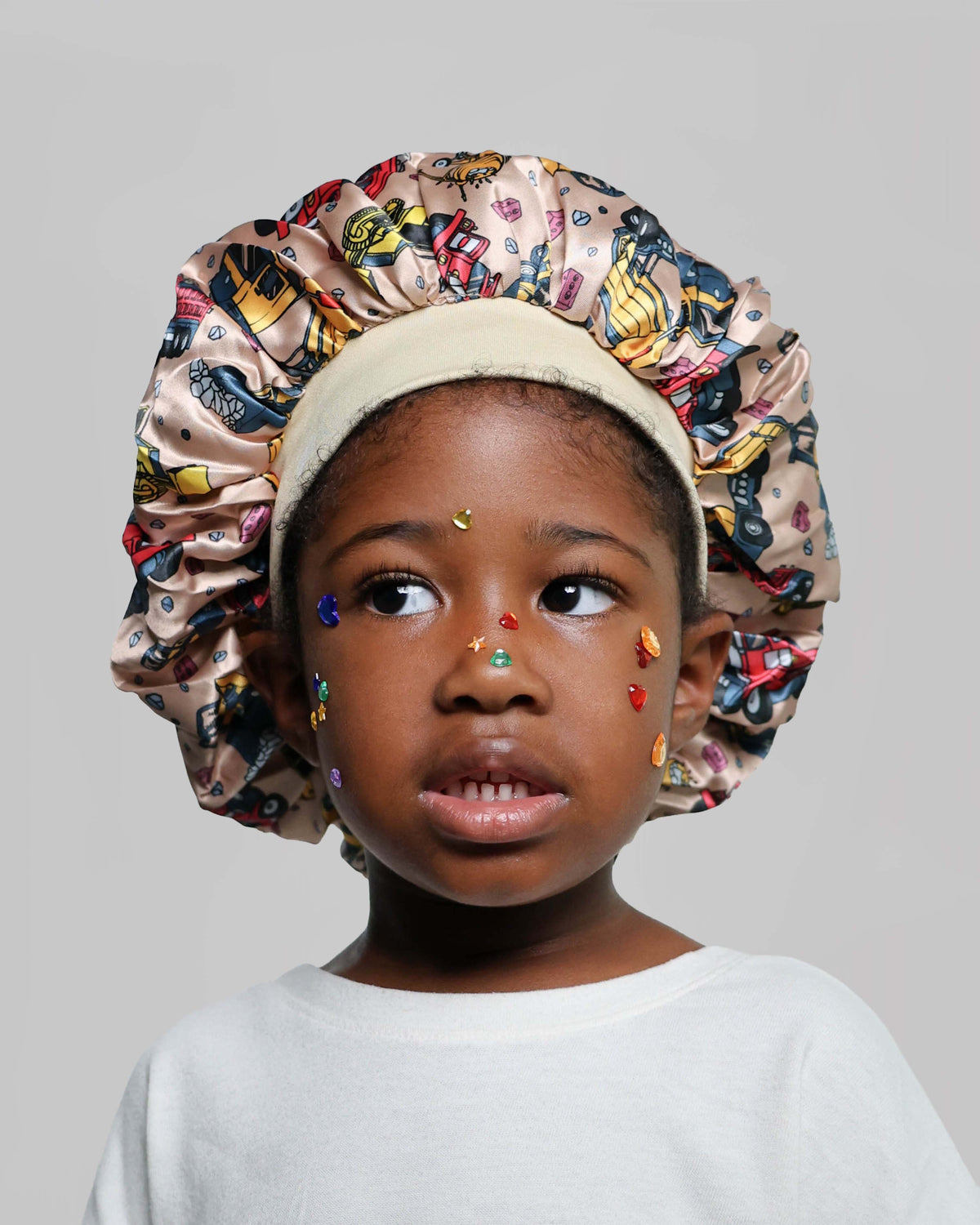
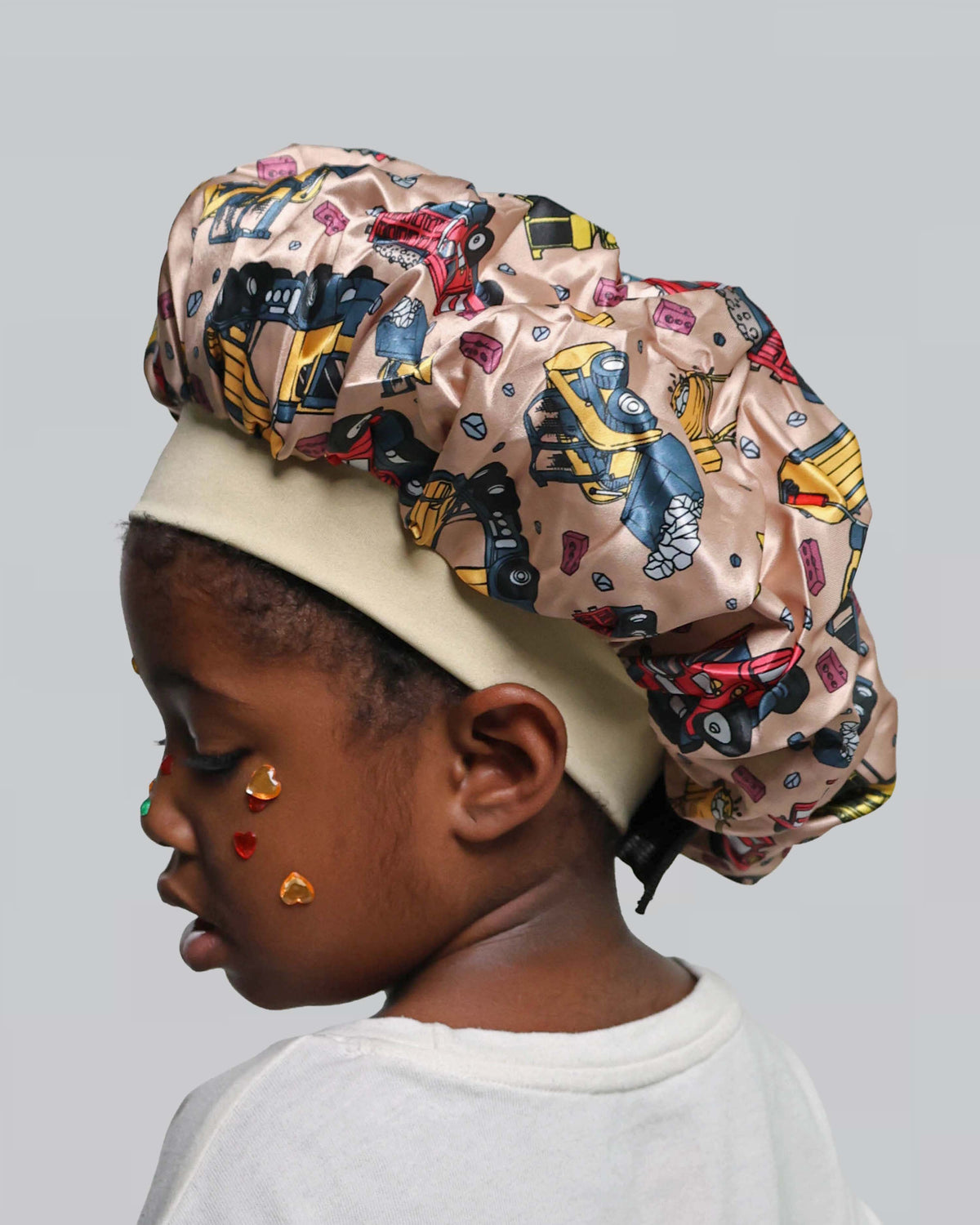
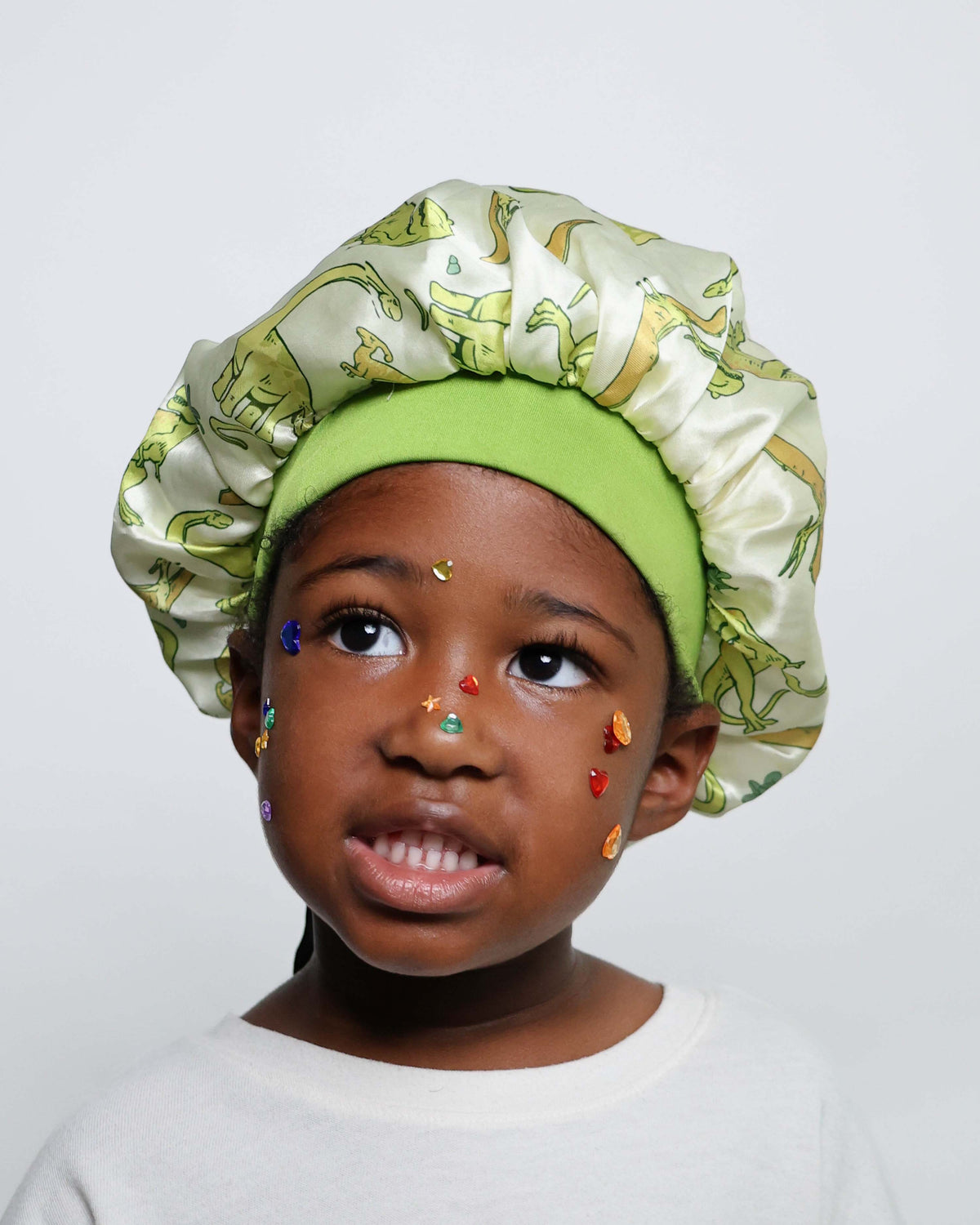
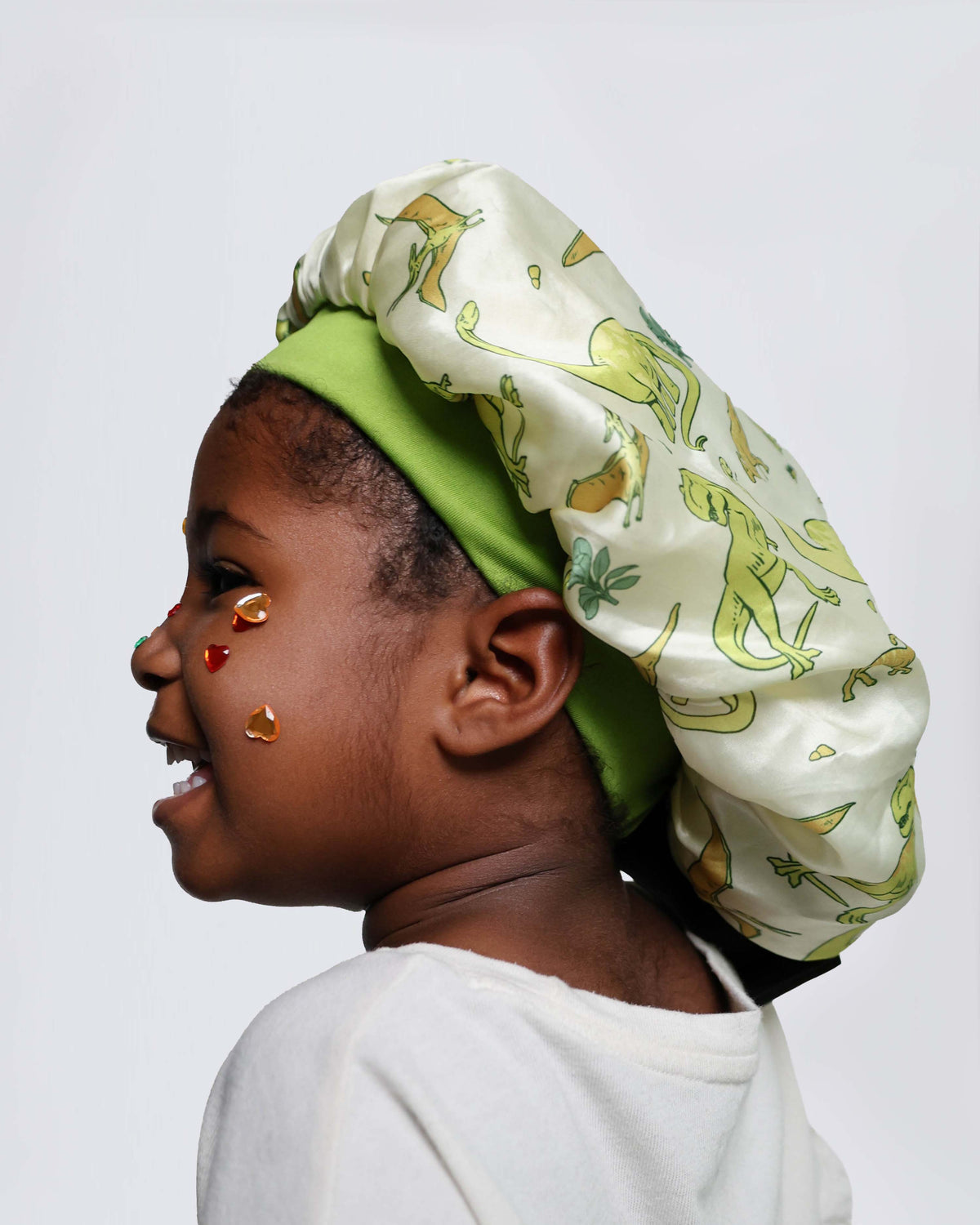
- Room for their hair. A short hairstyle won't need the same amount of space as long curls, braids, or locs. Make sure there's enough room to tuck the hair in without squeezing or flattening it unnecessarily.
- A comfortable band. You want the bonnet to stay in place without feeling too tight. If it leaves marks, causes discomfort, or pulls at the hairline, it's worth trying a different fit.
- A style they love. This might seem like a small detail, but letting your child choose a print or color can make bedtime easier. When they feel excited about wearing something, it becomes less of a battle to get them to put it on.
Ultimately, comfort and consistency matter just as much as the fabric itself.
The takeaway
The next time your child wakes up, take a quick look at where their bonnet ended up.
If it's on the floor instead of their head, it might be time to revisit the fit or try a different style. And if their hair still feels dry, take another look at your moisturizing routine rather than expecting the bonnet to do all the work.
A bonnet isn't a miracle product, and it doesn't need to be. It's one small part of a routine that helps you care for your child's hair over time.
Sometimes, it's those simple habits we stick with that make the biggest difference.
Further reading: Why You Should Sleep on a Silk Pillowcase (Consumer Reports) · Silk (Britannica) · Satin (Britannica) · The Simple Hair Routine We Keep Coming Back To


Be the first to comment.